AI Agents Explained: Perception, Planning, Memory, and Tool Use
What actually separates an 'AI agent' from a chatbot? A breakdown of the four components — perception, planning, memory, and tool use — and the observe-plan-act loop that lets AI systems complete multi-step tasks on their own, including where they still fail.
Aug 4, 2026
6 min read

A Brief History of AI: From the Turing Test to ChatGPT
How artificial intelligence actually got here — symbolic reasoning, two AI winters, the knowledge-acquisition bottleneck that killed expert systems, AlexNet's real numbers, and why the transformer's parallelizable attention mechanism, not raw cleverness, is what actually won.
Aug 4, 2026
8 min read

Machine Learning vs. Deep Learning vs. LLMs: AI's 'Species Classification,' Explained
Machine learning, deep learning, and large language model get used as if they're synonyms. They aren't — they're nested subsets, and understanding the nesting is the fastest way to make sense of any AI conversation.
Aug 4, 2026
5 min read

API, MCP, and Skills: The Three Layers Behind How an AI Agent Actually Calls a Tool
A precise, non-hand-wavy explanation of what an API actually is, why Anthropic's Model Context Protocol (MCP) exists and what problem it solves, and how 'Skills' differ from both — the plumbing underneath every AI agent that does real work instead of just talking.
Aug 4, 2026
5 min read

Diffusion Models vs. LLMs: Why AI Image Generation and AI Chat Run on Different Math
A chatbot and an image generator are both called 'AI,' but underneath they barely resemble each other. Here's how diffusion models denoise their way to a picture, how that differs from an LLM predicting the next word, and why neither can natively do the other's job.
Aug 4, 2026
5 min read

What Is Generative AI? The Real Difference From Discriminative AI
Discriminative AI answers 'which category?' Generative AI produces something new that never existed before. That one distinction is what actually explains why the last few years of AI have felt like a different era from everything before them.
Aug 4, 2026
5 min read
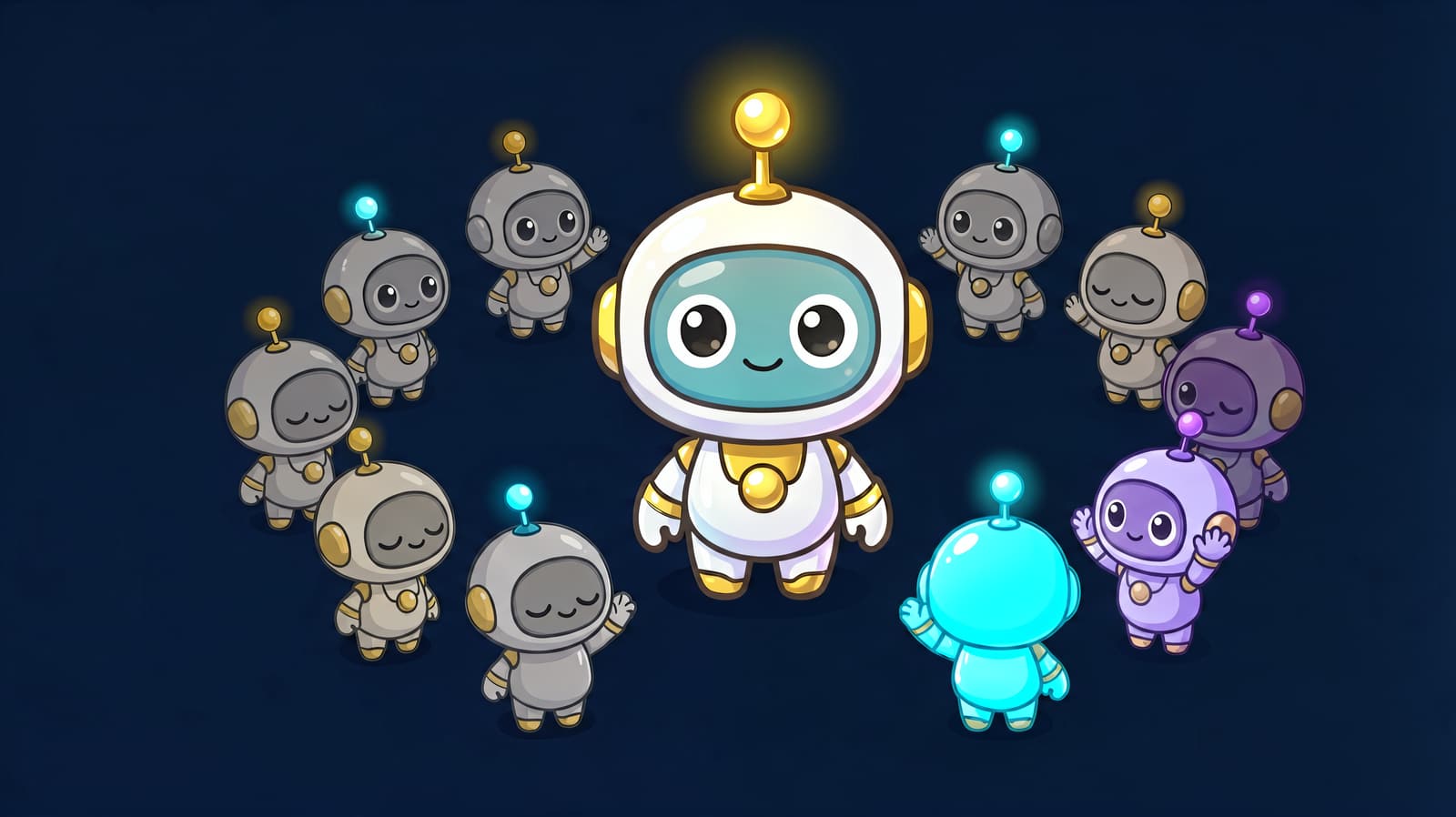
What Is a Mixture-of-Experts (MoE) Model? Why Modern LLMs Only Use Part of Themselves
DeepSeek, Mixtral, and (reportedly) GPT-4 all use Mixture-of-Experts architecture — a way to build a model with an enormous total parameter count while only activating a small fraction of it per token. Here's exactly how the routing works and what it actually trades away.
Aug 4, 2026
4 min read

Multimodal AI Explained: How One Model Understands Images, Text, and Audio
What 'multimodal' actually means at a technical level: different data types get converted into a shared numerical representation a single model can reason over together, instead of needing separate specialized systems stitched into one product.
Aug 4, 2026
4 min read

What Is a Large Language Model, Actually? Tokens, Parameters, and Context Windows Explained
A large language model isn't a database of facts and it isn't 'thinking' in any settled sense — it's a next-token predictor trained on enormous text corpora. Here's precisely what tokens, parameters, and context windows mean, and what that architecture is and isn't good at.
Aug 4, 2026
4 min read